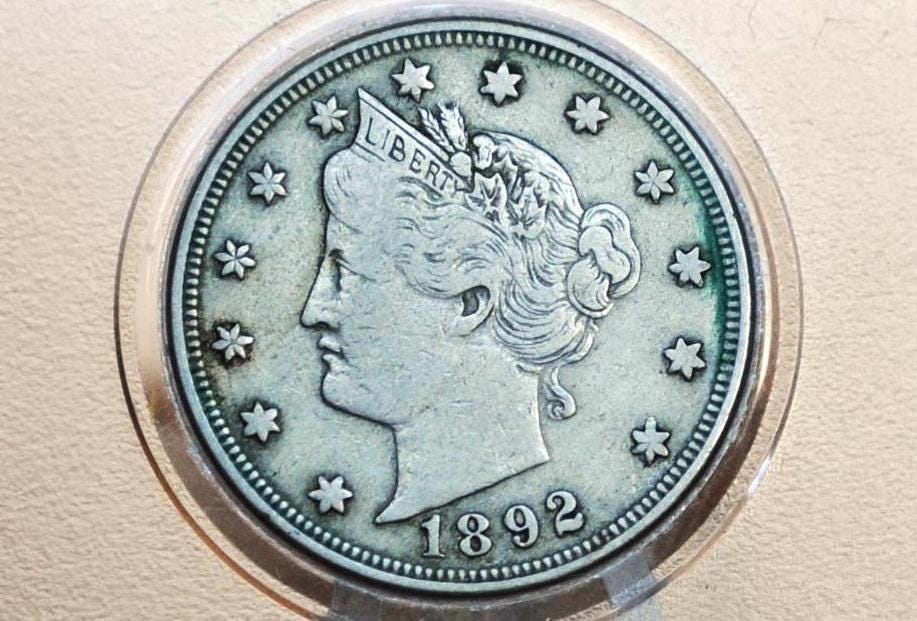
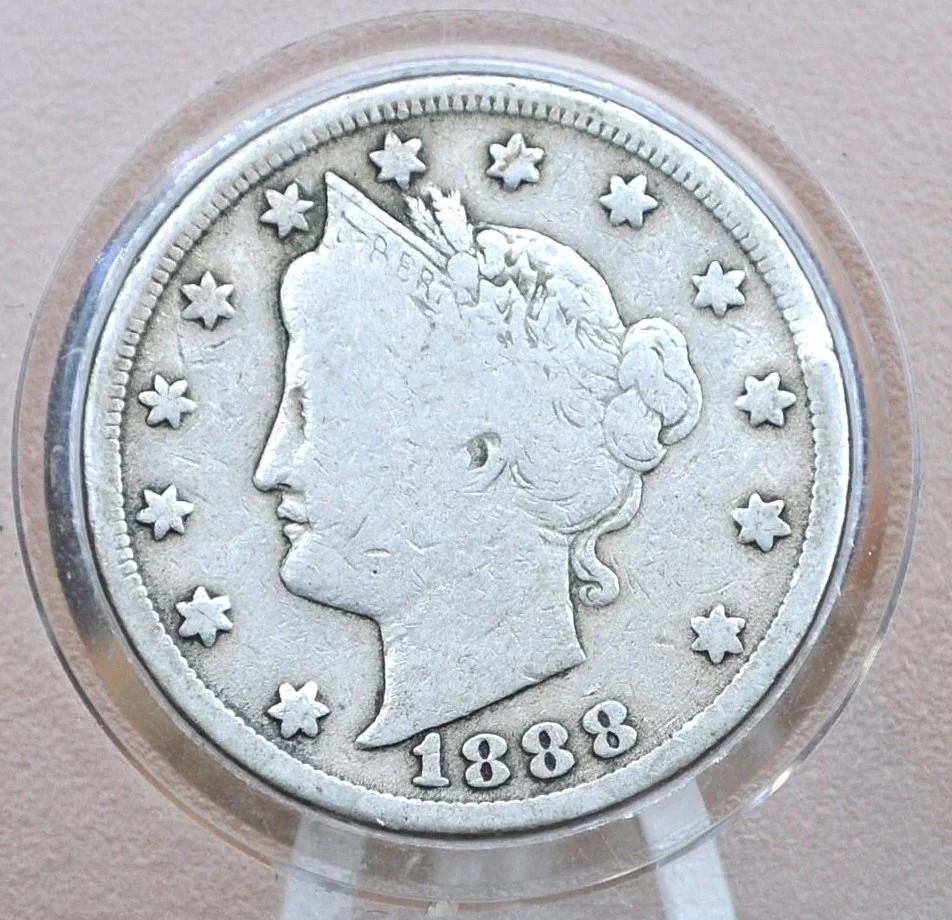
1913-D Buffalo Nickel Type 1 Denver Mint - XF (Extremely Fine) Grade / Condition - 1913 D Indian Head Nickel Type One / Type I

1913-D Buffalo Nickel Type 1 Denver Mint - XF (Extremely Fine) Grade / Condition - 1913 D Indian Head Nickel Type One / Type I
This listing is for one 1913-D Buffalo Nickel, as pictured. XF Grade / Condition. Better date, only 5,337,000 Denver Mint Type 1 Buffalos were minted, compared to 30,992,000 in Philadelphia.
How the changes came about to the buffalo nickel in 1913, Type 1 vs. Type 2:
The main difference is that the ground that the Buffalo stands on is flat instead of standing on a hillside.
In 1913, the buffalo nickel went into production. Charles Barber (the Mint Engraver) monitored the rate at which dies were expended, as it was the responsibility of his Engraver's Department to supply all three mints with working dies. On March 11, 1913, he wrote to the Superintendent of the Philadelphia Mint, John Landis, that the dies were being used up three times faster than with the Liberty Head nickel. His department was straining to produce enough new dies to meet production. In addition, the date and denomination were the points on the coin most subject to wear, and Landis feared the value on the coin would be worn away. Barber then proposed revisions, which were approved after samples were made. The changes enlarged the legend "FIVE CENTS" and changed the ground on which the bison stands from a hill to flat ground. According to data compiled by numismatic historian David Lange from the National Archives, the changes to what are known as Type II nickels (with the originals: Type I) actually decreased the die life. The new Treasury Secretary, William G. McAdoo, wanted further changes in the coin, but Fraser had moved on to other projects and was uninterested in revisiting the nickel. The thickness of the numerals in the date was gradually increased, making them more durable; however the problem was never addressed with complete success, and even many later-date Buffalo nickels have the date worn away.
Buffalo Nickels were produced from 1913 to 1938 and are notorious for their deteriorating design. Because the features, including the date, are high relief, the coins have worn quickly. Despite attempts by the Mint to adjust the design of the coin, they proved to strike indistinctly, and to be subject to wear quickly. The dates were easily worn away in circulation.
In 1938, after the expiration of the minimum 25-year period during which the design could not be replaced without congressional authorization, it was replaced by the Jefferson nickel, designed by Felix Schlag. Fraser's design is admired today, and has been used on commemorative coins and the gold American Buffalo series and buffalo Nickels with and without dates are used in belts, rings, wallets, and other pieces of jewelry and clothing.
Great & necessary coin series for any collection!
Thanks so much for stopping by!
1913-D Buffalo Nickel Type 1 Denver Mint - XF (Extremely Fine) Grade / Condition - 1913 D Indian Head Nickel Type One / Type I
Original: $39.00
-65%$39.00
$13.65Product Information
Product Information
Shipping & Returns
Shipping & Returns
Description
This listing is for one 1913-D Buffalo Nickel, as pictured. XF Grade / Condition. Better date, only 5,337,000 Denver Mint Type 1 Buffalos were minted, compared to 30,992,000 in Philadelphia.
How the changes came about to the buffalo nickel in 1913, Type 1 vs. Type 2:
The main difference is that the ground that the Buffalo stands on is flat instead of standing on a hillside.
In 1913, the buffalo nickel went into production. Charles Barber (the Mint Engraver) monitored the rate at which dies were expended, as it was the responsibility of his Engraver's Department to supply all three mints with working dies. On March 11, 1913, he wrote to the Superintendent of the Philadelphia Mint, John Landis, that the dies were being used up three times faster than with the Liberty Head nickel. His department was straining to produce enough new dies to meet production. In addition, the date and denomination were the points on the coin most subject to wear, and Landis feared the value on the coin would be worn away. Barber then proposed revisions, which were approved after samples were made. The changes enlarged the legend "FIVE CENTS" and changed the ground on which the bison stands from a hill to flat ground. According to data compiled by numismatic historian David Lange from the National Archives, the changes to what are known as Type II nickels (with the originals: Type I) actually decreased the die life. The new Treasury Secretary, William G. McAdoo, wanted further changes in the coin, but Fraser had moved on to other projects and was uninterested in revisiting the nickel. The thickness of the numerals in the date was gradually increased, making them more durable; however the problem was never addressed with complete success, and even many later-date Buffalo nickels have the date worn away.
Buffalo Nickels were produced from 1913 to 1938 and are notorious for their deteriorating design. Because the features, including the date, are high relief, the coins have worn quickly. Despite attempts by the Mint to adjust the design of the coin, they proved to strike indistinctly, and to be subject to wear quickly. The dates were easily worn away in circulation.
In 1938, after the expiration of the minimum 25-year period during which the design could not be replaced without congressional authorization, it was replaced by the Jefferson nickel, designed by Felix Schlag. Fraser's design is admired today, and has been used on commemorative coins and the gold American Buffalo series and buffalo Nickels with and without dates are used in belts, rings, wallets, and other pieces of jewelry and clothing.
Great & necessary coin series for any collection!
Thanks so much for stopping by!
1913-D Buffalo Nickel Type 1 Denver Mint - XF (Extremely Fine) Grade / Condition - 1913 D Indian Head Nickel Type One / Type I